Warehouse safety programs sit at the intersection of regulatory compliance, worker welfare, operational costs, and daily throughput. Facility managers are directly responsible for the systems, training, and documentation that ensure warehouse safety and prevent injuries across their sites. A structured approach turns scattered safety activities into a measurable program with tracked results across shifts and seasons.
Industry data underscores the scale of the challenge for warehouse operators across every logistics segment. According to the National Safety Council, the total cost of work injuries in 2024 was $181.4 billion. Structured best practices give managers the framework needed to lower that rate through targeted daily action.
The 7 Warehouse Safety Practices at a Glance
Warehouse safety programs rely on a set of core practices that help reduce risk, support compliance, and improve day-to-day operations. The seven practices below provide a scalable framework for facilities of all sizes, from single-site warehouses to multi-site distribution networks. Managers can tailor procedures within each area to address site-specific hazards, workflows, and operational requirements.
Focus on these seven areas during safety reviews and annual audits:
- Formal operator training and certification for forklifts and powered industrial trucks
- Documented daily and periodic equipment inspections with follow-up action tracking
- Housekeeping routines that keep aisles, docks, and work areas clear and dry
- Clear signage, floor markings, and separated pedestrian and forklift traffic paths
- Personal protective equipment (PPE) enforcement matched to task and hazard exposure
- Incident and near-miss reporting with documented root-cause analysis
- Documented emergency response plans covering fire, medical, and evacuation events
The most effective safety programs connect these practices through training records, inspection findings, incident data, and corrective actions. The sections below take a closer look at the highest-impact areas, including training, housekeeping, inspections, and reporting.
Operator Training and Certification for Warehouse Safety
Formal operator training reduces incident rates across every warehouse safety program with measurable impact on injury statistics. OSHA requires certified training for every powered industrial truck operator, with re-certification every three years. Training must cover vehicle operation, workplace hazards, load handling, and pedestrian awareness during initial certification.
In addition, refresher training becomes mandatory after any accident, near-miss, or unsafe operation observation involving a certified operator. Documentation of every session protects the facility during audits and insurance reviews of the safety program.
Uncertified operators trigger citations, elevated insurance premiums, and personal liability exposure for facility leadership teams. Additionally, forklift violations ranked among the most cited OSHA standards during recent enforcement cycles across warehousing.
Site-specific hazards require training modules built around the actual layout, traffic patterns, and equipment inside the facility. Cross-training across shifts helps preserve operator knowledge during turnover and vacation coverage periods each year.
Our safety and uptime guidance covers training program examples across warehouse and distribution facilities. Training discipline turns compliance from a checkbox into a measurable driver of daily safe operation.
Housekeeping, Signage, and Traffic Management
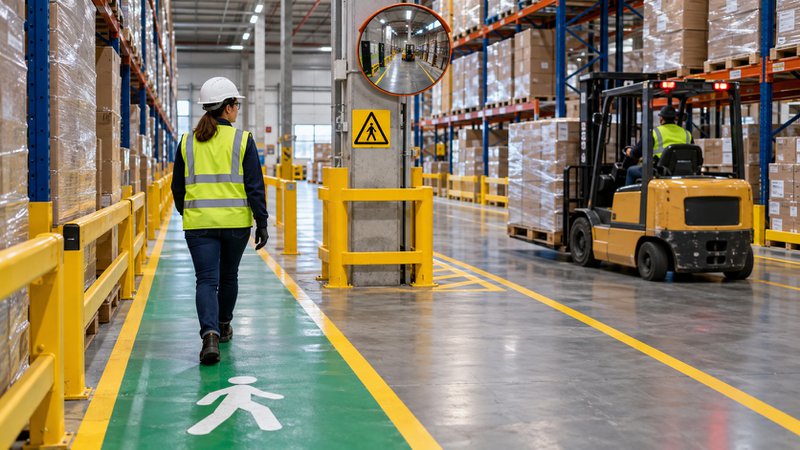
Clean floors, visible markings, and separated traffic paths eliminate a large share of preventable warehouse safety incidents. Spills, debris, and clutter cause slips, trips, and falls that account for a significant share of recordable events. Signage and floor markings guide pedestrian and forklift movement through predictable paths across the entire operation.
Furthermore, wet floors from cleaning, condensation, or trailer runoff require immediate cleanup and clear warning signage. Dock plates, trailer edges, and pit openings all present fall hazards that housekeeping routines must address. Meanwhile, seasonal debris from rain, snow, or roofing work adds to the daily housekeeping workload during winter.
Traffic management combines painted lanes, physical barriers, mirrors, and audible or visual forklift alerts at blind corners. Additionally, dedicated pedestrian routes reduce the risk of pedestrian strikes during heavy traffic periods on the floor. Polymer guardrails and bollards absorb impact at doorways and corners without damaging the facility floor surface.
Structured housekeeping schedules keep floors, aisles, and dock areas clear across every operating shift.
Equipment Inspections That Support Warehouse Safety
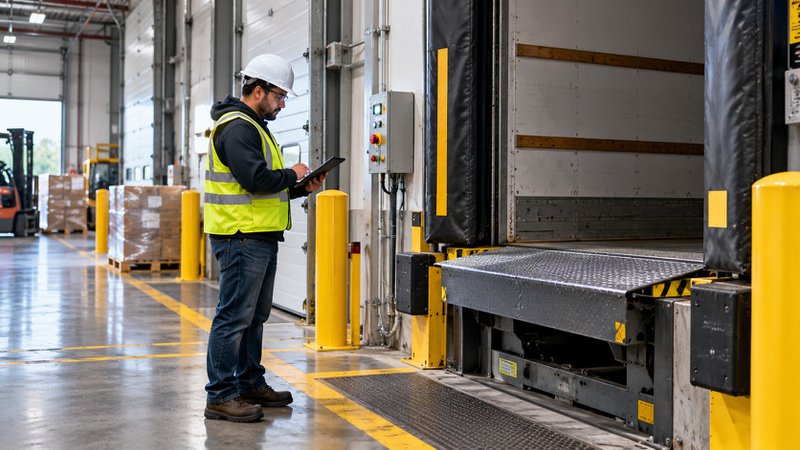
Documented equipment inspections identify defects before those defects produce incidents across every warehouse safety operation. Forklifts, dock levelers, doors, racking, and safety devices all require inspection intervals matched to daily use. OSHA requires forklift examinations before every operating shift for powered industrial truck compliance.
In fact, inspection findings feed directly into work orders, part replacements, and capital planning cycles across the facility. Documented records support audits by regulators, insurance carriers, and internal safety committees during formal reviews.
Skipped or rushed inspections produce most of the mechanical failure incidents that trigger citations and injuries. Additionally, insurance carriers increasingly require documented inspection programs as a condition of coverage for warehouse operations. Inspection frequency should match manufacturer specifications, cycle counts, and observed wear rates inside the facility.
Incident Reporting and Documentation Practices
Incident reports and near-miss documentation reveal the failure patterns that daily inspections miss inside warehouse safety programs. Every recordable injury, close call, and equipment malfunction feeds a root-cause analysis that drives corrective action. Documentation also protects the facility during workers' compensation claims and OSHA investigations that follow serious events.
Additionally, near-miss reports carry particular value because they identify hazards before someone gets hurt on the floor. According to OSHA Online Center, 25% of all warehouse accidents occur at the loading dock, making it a hotspot for serious incidents. Root-cause analysis for every incident often identifies systemic weaknesses in training, procedures, or equipment across the operation.
Reporting channels should move incident findings from operators to safety leadership within hours of the event. Digital reporting forms with photo-upload capabilities helps capture critical evidence before it is lost, while reducing delays in the reporting process. Over time, trend analysis can reveal training gaps, high-risk areas, and recurring equipment issues across the facility. To support continuous improvement, organizations should review incident categories annually against manufacturer bulletins, updated OSHA guidance, and industry loss trends.
Strengthen Warehouse Safety Today With MINER
Warehouse safety programs work when the seven practices connect through shared data, training, and accountability across the facility. Operator training, equipment inspections, housekeeping, signage, PPE enforcement, incident reporting, and emergency plans each fill a specific role. Together, they measurably reduce injury rates, insurance costs, and regulatory exposure across sites.
Contact us to schedule a consultation with our safety experts to strengthen your warehouse safety program.