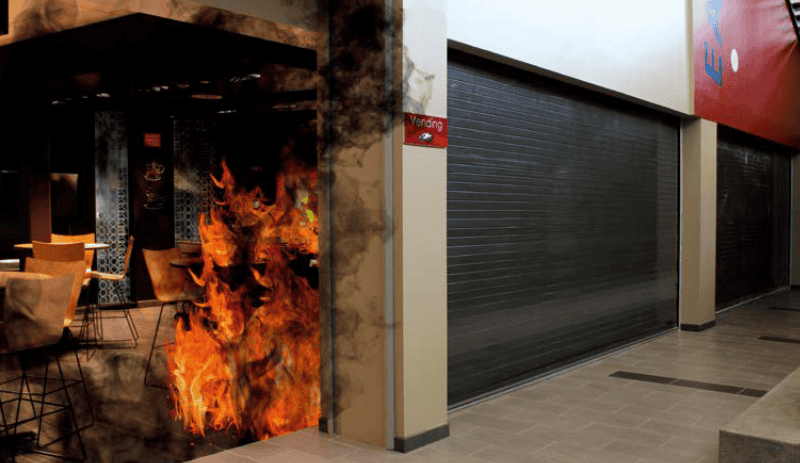
Fire-rated doors are designed to protect people and property by helping contain fire and smoke during an emergency. Yet many facility managers are unsure which doors require testing, how often they should be inspected, or what’s involved in a fire door drop test.
Here are seven important facts every facility manager should know.
1. Not Every Commercial Door Requires a Drop Test
Standard overhead doors, sectional doors, and most loading dock doors do not require annual drop testing.
Fire door drop tests apply to fire-rated doors, such as rolling steel fire doors, sliding fire doors, and other fire-rated opening protectives designed to automatically close during a fire.
2. Fire Doors Are Life Safety Systems
Unlike conventional doors that are used for security or daily operations, fire-rated doors serve a critical life safety purpose.
When activated by a fire alarm, release device, or fusible link, the door automatically closes to help prevent the spread of fire and smoke.
3. Annual Testing Is Typically Required
Many fire-rated rolling doors are subject to annual inspection and testing requirements under NFPA 80.
Regular testing helps verify that the door will perform properly when an emergency occurs and provides documentation for compliance purposes.
4. A Drop Test Verifies the Door Will Close Properly
The purpose of a fire door drop test is simple: confirm the door releases and closes as designed.
During testing, technicians verify that the door:
- Releases properly
- Closes without obstruction
- Reaches the fully closed position
- Resets correctly after activation
5. Loading Dock Facilities Often Have Fire-Rated Doors
Warehouses and distribution centers commonly use rolling steel fire doors to separate:
- Loading docks from warehouse storage
- Manufacturing and production areas
- Hazardous material storage spaces
- Fire-rated corridors and openings
These doors are often overlooked because they may rarely be activated under normal operating conditions.
6. Inspectors Frequently Find Correctable Issues
Annual inspections often identify problems before they become compliance or safety concerns.
Common findings include:
- Damaged slats
- Misaligned guides
- Obstructions in the door path
- Worn release devices
- Broken fusible links
- Deferred maintenance issues
Addressing these problems early can help avoid costly repairs and operational disruptions.
7. Documentation Matters
Testing the door is only part of the process.
Facilities should maintain records of inspections, testing, deficiencies, and corrective actions. Proper documentation can help support internal safety programs, audits, insurance reviews, and AHJ inspections.
The Bottom Line
If your facility has fire-rated rolling steel doors, annual drop testing is one of the most important preventive maintenance activities you can perform. Regular inspections help verify life safety performance, identify potential issues, and support compliance efforts before problems arise.