
For cold storage and temperature-controlled facilities, every degree of thermal loss at the loading dock translates directly into higher operating costs. A worn dock seal, a slow-closing door, or a gap in weather protection can continuously bleed conditioned air. In facilities that run around the clock, that loss compounds fast. Understanding why dock seals and high-speed doors work together is essential for any facility manager trying to control energy spend at the dock and overall cold‑storage performance.
The Energy Problem Starts at the Dock Seals
Loading docks are transition zones between a controlled interior and the outside world. Every time a truck parks at the dock, the seal between the trailer and the building determines how much air escapes and how much ambient air enters. In cold storage, temperatures may need to stay between 28 and 34 degrees F for fresh produce, or far below zero for frozen goods. Even so, brief exposure to outside air puts the refrigeration system under extra load. That means every dock cycle has a real energy cost.
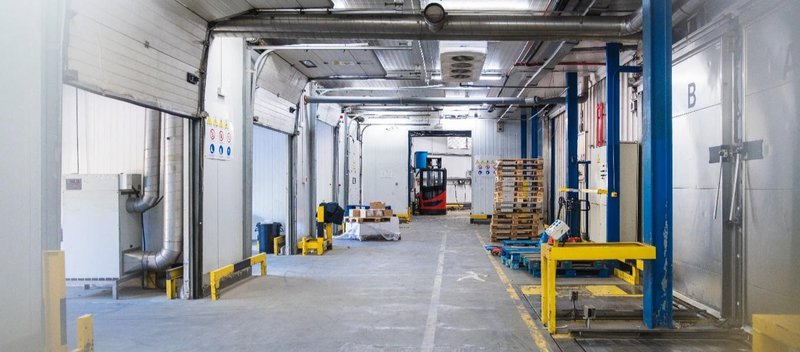
Dock seals and dock shelters are the first line of defense. A fitted dock seal presses against the sides and top of a trailer, forming a tight enclosure around the dock opening. However, when the seal is worn, torn, or poorly sized, for cold storage and temperature-controlled facilities, every degree of thermal loss at the loading dock translates directly into higher operating costs. A worn dock seal, a slow-closing door, or a gap in weather protection can continuously bleed conditioned air. In facilities that run around the clock, that loss compounds fast. For facilities under the Food Safety Modernization Act, temperature swings during loading are not just an efficiency issue. They are also a compliance risk.
Why High-Speed Doors Reduce Dock Seals' Workload Per Cycle
The second key factor is how fast the dock door closes once a trailer leaves or between loading events. Standard sectional doors open and close slowly. That means longer exposure windows every time the door cycles. In busy cold storage operations, those windows add up across dozens or hundreds of daily cycles. As a result, even a small exposure time per cycle leads to a big thermal loss over a full shift.
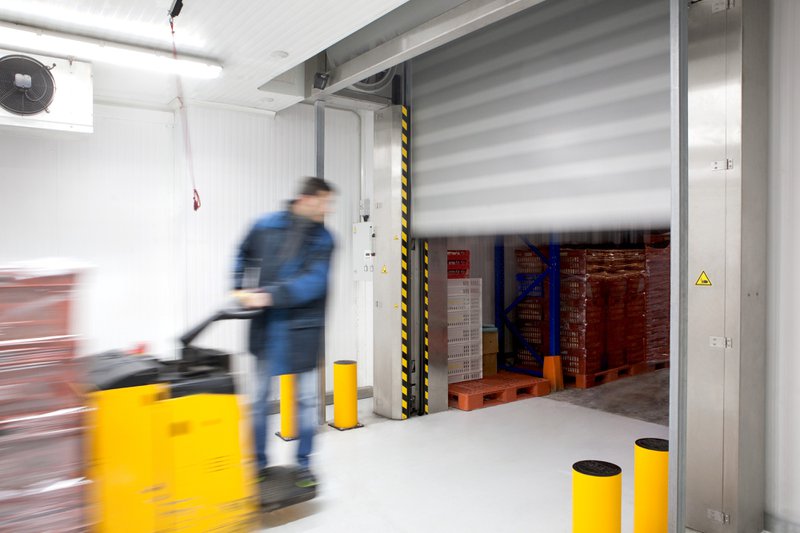
High-speed doors help minimize energy loss by opening and closing quickly, reducing the amount of time the dock opening is exposed to outside air during each cycle. For facilities running multiple shifts, the energy savings over a full year can be large. Similarly, less load on the refrigeration system extends its life and lowers wear on compressors.
High-speed doors also reduce the risk of condensation inside the facility. When warm, humid air enters a cold space and hits cold surfaces, it forms moisture. That moisture creates slip hazards on floors, promotes mold growth, and can damage stored products. Faster door cycling limits the humid air that gets in with each cycle. For that reason, high-speed doors are as much a safety investment as an energy one. In short, faster cycling protects both people and the product.
Beyond energy savings, high-speed doors improve throughput. Forklift operators and dock workers don't have to wait for slow doors to open or close. Traffic moves more freely, and that benefit compounds across every shift.
The Compounding Cost of Deferred Dock Maintenance
Dock seals and high-speed doors only work well when they get consistent maintenance. A seal that has lost its compression no longer blocks air. A high-speed door with worn guides, damaged panels, or a degraded bottom seal lets air in even when closed. Deferred maintenance means the facility pays for equipment that no longer does its job. Moreover, the longer the problem goes unfixed, the more thermal loss builds up.
A simple energy assessment or proactive maintenance visit can catch problems before they become loss drivers. Scheduled inspections check seal compression, curtain condition, door alignment, and weatherproofing at set intervals. Because technicians record findings over time, facilities can track wear trends and plan fixes before failures occur. That is why condition-based maintenance costs less than reactive repair. In addition, inspection records support budget planning and forecasting.
Common signs that dock seals or doors need attention include:
- Visible tears, gaps, or compression loss on dock seals or shelters
- Drafts or temperature inconsistency near the dock opening when a trailer is docked
- Condensation forming on floors or walls near the dock
- High-speed door panels that show damage, misalignment, or slow response
- Energy bills trending up without a corresponding increase in throughput
For multi-site cold storage operators, consistent standards across all locations matter as much as the standards themselves.
How MINER Supports Cold Storage Operations
Whether you're focused on FSMA compliance, energy efficiency, or operational reliability, MINER delivers the expertise and data-driven insights needed to keep your cold storage environment performing at its best. We help food processors, national grocery chains, and beverage and bottling plants across North America protect product integrity, reduce compliance risks, and keep operations running efficiently.
Contact us to discuss the right maintenance strategy for your operation.