An organized warehouse equipment inspection checklist turns daily walkthroughs into structured data that supports safer operations. Loading docks, forklifts, overhead doors, racking, and safety systems carry distinct failure patterns requiring targeted checks. A well-built checklist captures early warning signs before minor wear becomes a full mechanical breakdown.
Regulatory requirements and industry loss data point toward structured inspections as a baseline operational discipline. According to the Forklift Academy, forklifts cause 85 deaths and 34,900 injuries annually across United States facilities. A written checklist gives operators, supervisors, and technicians a shared reference point for defect reporting.
What Should a Warehouse Equipment Inspection Checklist Include?
A functional checklist covers structural integrity, mechanical systems, safety devices, hydraulic components, and power systems for every asset. Each category maps to a failure pathway documented across manufacturer specifications, insurance data, and federal guidance. Documented findings then feed into repair scheduling, part replacement planning, and long-term budget forecasting.
Define Warehouse Equipment Categories Before Writing Any Checks
A useful inspection checklist starts with a clear inventory of every warehouse equipment category inside your facility. Categorization prevents overlap, missed assets, and ambiguity about check ownership during daily rounds. Group assets by function first, then by manufacturer to align with published inspection intervals.
Common facility asset categories include mobile equipment, loading dock systems, doors, storage racking, and safety infrastructure. Use the groups below to help organize checkpoints across your facility:
- Mobile equipment: forklifts, pallet jacks, order pickers, reach trucks, and yard trucks
- Loading dock systems: levelers, restraints, bumpers, seals, shelters, and dock lights
- Door systems: overhead sectional, high-speed, coiling, and fire-rated cold storage doors
- Storage and safety: pallet racking, guardrails, mezzanines, smoke curtains, and fall protection
Furthermore, ownership assignments create clear accountability across supervisors, maintenance teams, and service partners. Category discipline produces cleaner records that support root-cause analysis after any incident on the floor. Explore MINER's warehouse loading dock services for guidance on dock system inspection design.
Set Inspection Frequencies Based on Use and Risk
Frequency selection drives the balance between labor cost and defect detection across your warehouse equipment inventory. High-use assets like forklifts require daily pre-shift checks, while fire doors need documented annual inspections. Match inspection cadence to manufacturer specifications, regulatory requirements, and observed wear patterns inside your facility.
Furthermore, cadence design should account for shift patterns, seasonal peaks, and equipment age across the operation. For example, high-cycle assets under 24/7 operation age faster than single-shift equipment inside the same building. Documented wear trends from prior records help set frequencies reflecting real usage rather than assumed usage.
Typical inspection intervals span daily, weekly, monthly, quarterly, semi-annual, and annual cycles inside industrial facilities. Additionally, some manufacturers specify cycle-count triggers rather than calendar dates for high-speed doors and hydraulic systems. Digital tracking tools compare actual cycles against manufacturer thresholds and generate inspection requests when triggers hit.
Write Specific Checkpoints for Each Warehouse Equipment Asset
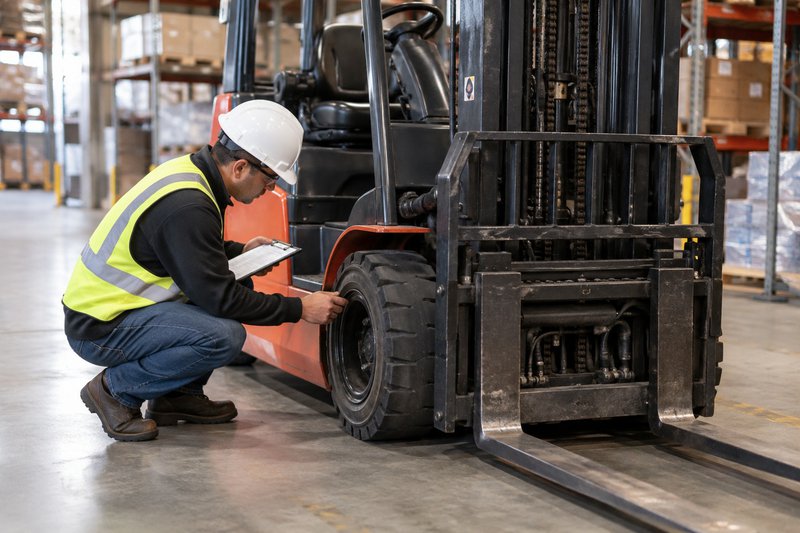
Vague check points produce vague results across daily inspection rounds performed at industrial facilities. Each warehouse equipment check must specify the exact component, condition indicator, and pass or fail threshold. Ambiguity in wording drives variable results between operators and produces unreliable data for maintenance planning.
Write each check as a single observable question with a binary yes or no answer whenever possible. Photograph or diagram examples of pass and fail conditions to remove interpretation gaps between team members.
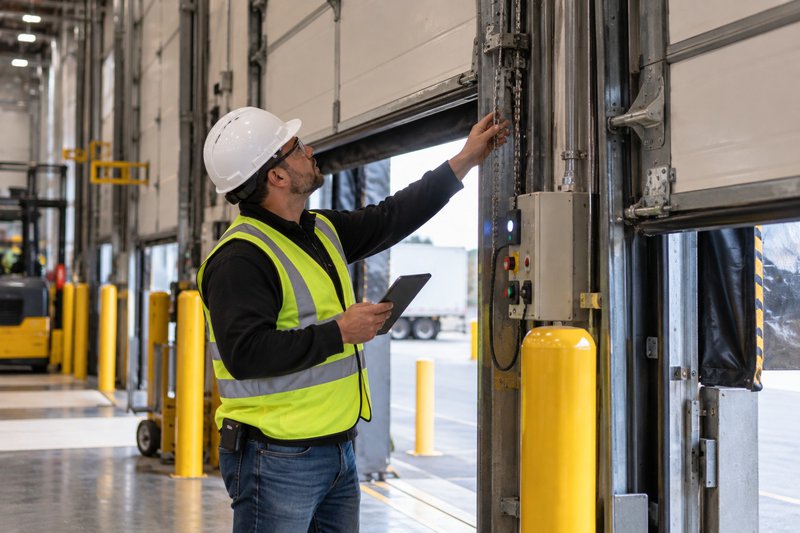
Common failure modes guide the most valuable checkpoints across every category and asset location. Furthermore, dock levelers should include lip extension, hydraulic pressure, deck alignment, and control panel checks. Forklifts require checks on tires, forks, mast chains, backrest, seat belt, horn, lights, and hydraulic leaks.
According to the Occupational Safety and Health Administration, forklift examinations must occur before every operating shift. Overhead door checkpoints should cover spring tension, cable condition, roller wear, track alignment, and sensor function.
Assign Ownership and Reporting Channels for Every Inspection
Ownership assignment turns a checklist from a document into an operational system with real accountability across facilities. Each checkpoint should link to a specific role responsible for completing, verifying, and escalating the result. Missing ownership produces missed inspections, delayed repairs, and unclear escalation paths for warehouse equipment defects on site.
Furthermore, ownership design typically pairs operators with pre-shift checks and supervisors with weekly management reviews. Third-party service partners often own quarterly, semi-annual, and annual inspections requiring specialized tools or certifications. Technicians handle monthly deeper inspections that fall between operator checks and specialist service visits.
Reporting channels move findings from the inspection point to the party responsible for repair scheduling. Additionally, defect severity ratings determine whether an issue triggers immediate work orders or scheduled maintenance windows. Digital forms with photo upload and automatic routing improve reporting speed inside busy warehouses. Meanwhile, paper systems still work when combined with clear submission points and daily supervisor review.
Review and Improve Warehouse Equipment Checklists Regularly
A checklist ages fast as new warehouse equipment enters service, workflows shift, and failure patterns change. Regular review keeps the document aligned with the operating environment across shifts, seasons, and equipment generations. Set a formal review interval of at least twice per year for every category inside the checklist. Revis sessions should include operators, supervisors, technicians, and service partners who bring different observation angles.
Data from past inspections shows which checkpoints catch defects and which produce false confidence during rounds. Metrics worth tracking include defect discovery rates, repeat findings by asset, and time from finding to repair. Missed defects and repeat findings both point to weak checkpoints requiring immediate revision and testing.
Additionally, incident reports and near-miss records reveal gaps between checklist coverage and actual failure modes. Compare current checklist items against manufacturer bulletins, recall notices, and updated regulatory guidance every year. Version-controlled checklists preserve institutional knowledge as staff rotates through the operation over multiple years.
Build Your Warehouse Equipment Program With MINER
A well-designed warehouse equipment inspection checklist protects productivity, safety compliance, and repair budgets across distribution operations. Each step supports the others by producing categories, cadences, ownership, and review data required for reliable inspections. Structured checklists give leadership documented proof of due diligence during audits, investigations, and insurance reviews.
Connect with MINER's facility experts for help designing your inspection program today!