A dock door failure during active operations cannot wait until morning. Distribution centers, food processing facilities, and high-volume warehouses run their doors hard. When one fails, every minute the dock position sits idle carries a measurable cost. How quickly a qualified technician attends to a dock door repair request largely determines how much that failure costs the facility.
Why Response Time Is the Critical Variable in Dock Door Repair

The repair itself is only part of the equation. Most of the cost builds in the hours between the failure and the technician's arrival. Dock operations stall. Labor plans shift. Carriers miss scheduled pickups or reroute entirely.
Facilities running tight inbound and outbound windows feel this most acutely. A two-hour response window and a four-hour response window look similar on paper. In operational terms, they can produce entirely different outcomes. The timing of the failure and what moves through that dock position on that day both factor in.
Evaluating loading dock door repair service agreements on verified response time performance, not just advertised availability, is the more reliable standard. Ask for the data before you need the service.
What Fast On-Site Dock Door Repair Response Requires
Genuine rapid response to dock door repair requests is more than just dialing a service hotline and getting a reply. Obviously, it will require technicians positioned close enough to reach the facility quickly. More important, efficient service also requires a dispatch system that routes calls efficiently around the clock. Finally, repairs will require service vehicles stocked with the parts most commonly needed on the first visit. A provider who checks these boxes delivers a fundamentally different outcome than one who simply answers the phone. Response time is a promise. First-visit resolution is the measure that actually matters.
A technician who arrives on time but waits for parts does not actually limit downtime. The full chain, from the initial call through diagnosis, parts availability, and completed repair, determines how fast the dock position returns to service. Facilities evaluating service partners should ask specifically about first-visit resolution rates, not just arrival times.
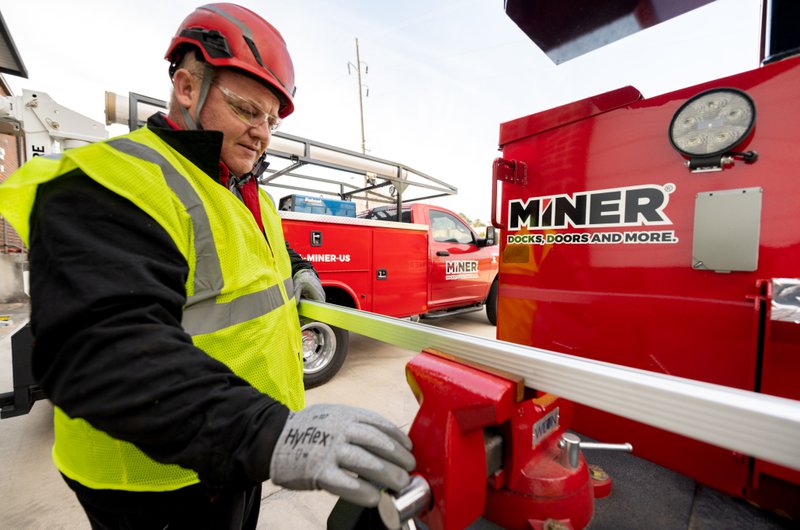
MINER operates a nationwide network of service branches with technicians available for dock door repair around the clock. Geographic coverage, experienced technicians, and stocked service vehicles are what make fast response operationally meaningful rather than just a promise.
The Relationship Between Repair History and Proactive Maintenance
Facilities that track repair history over time almost always find patterns. The same door positions fail repeatedly. The same components wear on a predictable schedule. Emergency calls cluster around the same conditions.
This information has real maintenance value. It tells a maintenance manager exactly where to focus proactive attention and reduce the frequency of emergency calls. A door position that generates three calls in twelve months is not having bad luck. It has a wear condition that scheduled inspections would have caught earlier. Facilities that use repair history to shape their maintenance planning consistently reduce their total repair burden over time. Treating each repair event as isolated means missing the pattern.
Proactive maintenance can help capture this type of pattern. Regular inspections identify conditions that precede failures and allow facilities to address them before an emergency call becomes necessary. Strong emergency response and proactive maintenance work together. Over time, this combination reduces how often an emergency repair call becomes necessary and how much disruption it causes when one does.
Setting the Right Standard for Your Facility
Not all repair service is equal, and the gap shows most clearly when a failure hits during peak operations. Facilities with an established service relationship recover faster and spend less. Those searching for a provider at the moment of failure start at a disadvantage.
The right time to evaluate your service capability is before the next failure, not during it. OSHA sets maintenance requirements for dock levelers and related equipment. A documented service relationship is part of meeting those requirements. A partner who already knows your facility, your equipment, and your schedule responds more effectively. One encountering your operation for the first time under pressure starts at a disadvantage.
MINER provides dock door repair services with 24/7 availability and nationwide coverage, backed by the comprehensive MinerCARE® service infrastructure. Continuity means faster diagnosis, better repair history, and a service partner who understands your facility before a failure forces the introduction. Contact us today to learn more about building a service relationship that limits your downtime exposure.