Managing loading dock and commercial door maintenance across multiple facilities is a different problem than managing a single site. The challenge is not finding a service provider who handles one location well. The real challenge is finding a partner who delivers consistent service quality across every facility in the portfolio. Standardized reporting and reliable response regardless of geography are part of that standard. Operations leaders, procurement teams, and facility managers overseeing multi-site networks need selection criteria that reflect that complexity.
Why Consistency Is the Defining Standard for Multi-Site Loading Dock and Door Service
Single-site facility managers typically evaluate providers on responsiveness, technical capability, and price. These criteria matter in multi-site environments too, but they are insufficient on their own. A provider who performs well at some locations and inconsistently at others creates a management burden rather than relieving one. Operations leaders with portfolio responsibility need to trust that service standards hold regardless of market. A program that performs well in one region but inconsistently in another is not a program. It is a patchwork.
Consistency at scale requires more than good intentions. First, it requires standardized processes. Then, it also requires trained technicians applying the same inspection criteria at every location. Finally, it requires reporting structures that give portfolio-level visibility into equipment condition and service history across the full network.
What National Coverage Actually Means in Practice
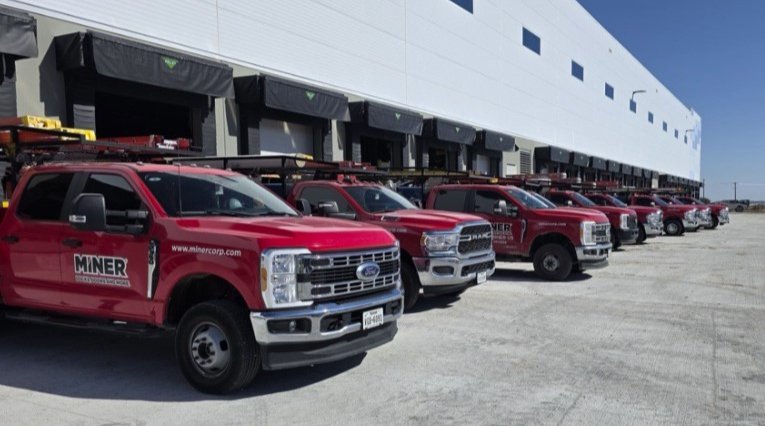
Many service providers describe themselves as national, but the operational reality of that claim varies widely. True national coverage for loading dock and commercial door service means having service infrastructure, not just geographic reach. A provider who subcontracts regional work to local vendors cannot guarantee the same standards, technician qualifications, or response times across all locations. The customer absorbs that variability.
For multi-site facility managers evaluating a service partner, the right questions focus on infrastructure. Where are your service branches located relative to my facilities? Are your technicians direct employees or subcontractors? How do you standardize inspection criteria and reporting across locations? A provider who cannot answer these questions precisely is not operating at the national account level.
Ideally, companies would prefer to deal with a nationwide branch network with direct-employee technicians and standardized service processes. The national account management structure is built specifically for multi-site customers. This infrastructure makes consistent loading dock service delivery possible at scale. It is not just a claim on a sales sheet.
The Value of a Single Accountable Partner
Multi-site facilities managing maintenance through a patchwork of regional vendors face a specific problem. When something goes wrong, accountability fragments. One vendor owns the equipment in one market, a different vendor owns another. No single partner holds full visibility or accountability for the portfolio.
A single service partner changes that structure entirely. One point of contact handles escalations. One reporting system covers equipment condition across all sites. One contract replaces a collection of regional agreements with varying terms and service levels.
For procurement teams, this simplification has direct value in contract management and cost control. For operations leaders, it means service quality and response standards sit with one accountable partner. They do not spread across a vendor network with different incentives and inconsistent performance.
Evaluating Loading Dock Service Partners on Long-Term Fit
Don't wait for a major breakdown to find a partner, as choosing a provider under pressure rarely ends well. The best time to evaluate a nationwide service partner is before a service failure or contract expiration creates urgency. A partner selected carefully under normal conditions performs better over the life of the relationship. One chosen quickly under pressure rarely delivers the accountability a multi-site program requires.
The US Occupational Safety and Health Administration‘s guidance on warehousing hazards and solutions outlines the maintenance and inspection requirements that apply across all warehouse and distribution facilities. A service partner operating to a consistent standard at every location matters for compliance as much as for operational performance. Key evaluation criteria include verified national infrastructure and branch coverage, standardized service and reporting processes, and demonstrated experience with facilities in your industry. OEM equipment relationships that support parts availability matter, as does a national account management structure that delivers genuine portfolio-level oversight.
MINER’s national account management model meets these criteria for customers operating loading dock and commercial door systems across distributed facility networks. The program scales with the portfolio and maintains consistent standards as the customer adds facilities. From comprehensive MinerCARE Safety & Service Programs to emergency repair response and OEM equipment installation, the service model addresses the full operational scope of multi-site management. Schedule a consultation to learn more about our proven track record of supporting multi-site facility operations with scalable, repeatable loading dock services nationwide.