
A distribution center running two or three shifts can cycle its dock doors hundreds of times a day. At that pace, minor wear on commercial doors quickly translates into performance loss, safety risks, and unplanned downtime. Waiting for a door to fail before calling for repair costs far more than it saves. Preventive commercial door repair is how high-volume facilities stay ahead of those costs.
Why Door Condition Drops Fast in High-Volume Settings
Commercial doors in distribution centers take more abuse than doors in almost any other setting. Constant forklift traffic, trailer impacts, and shift-after-shift cycling all accelerate wear. Seals crack. Springs lose tension. Tracks warp. Panels dent or separate. Each issue on its own may seem minor. Together, they reduce the dock door's ability to seal, open, close, and protect the people and equipment around it.
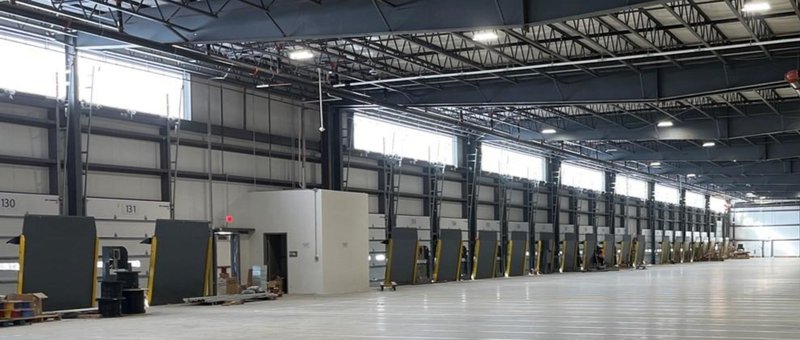
Door type also affects how fast wear adds up. High-speed doors, which many facilities use to improve throughput and temperature control, have more moving parts than standard sectional doors. While they deliver significant operational benefits when performing at their best, those additional components create more potential failure points and increase the need for regular inspections and service. Planned maintenance is what keeps them operating reliably and efficiently. In short, the more cycles a door handles, the more critical its service history becomes.
What Planned Commercial Door Repair Covers
Planned, proactive commercial door repair is not a single task. Instead, it is a structured program of inspection, adjustment, and targeted repair that fixes wear before it becomes failure. A well-designed program for distribution centers covers these key areas:
- Spring tension and balance checks to confirm doors open and close with even force
- Track alignment inspection to prevent binding, noise, and uneven panel wear
- Seal and weatherstrip checks to maintain temperature control and cut energy loss
- Panel integrity review for dents, cracks, or gaps that reduce structure and insulation
- Safety sensor and auto-reverse testing to protect workers and equipment
- Lubrication of all moving parts to cut friction and extend component life
- Hardware inspection covering hinges, cables, rollers, and brackets
Each check connects directly to safety, energy efficiency, or uptime.
The Real Cost of Reactive Commercial Door Repair
A failed commercial door in a distribution center is not just a maintenance problem. It is an operations problem. If a dock door fails mid-shift, loading and unloading stops at that position. Labor idles. Trailers queue. Delivery schedules slip. For a facility running thousands of units per shift, even a two-hour outage has a real, measurable cost. The OSHA warehousing hazards guidance makes clear that loading dock areas carry above-average injury risk, and degraded door equipment raises that risk further.
A door in degraded condition also creates problems that build over time. A misaligned track stresses panels and hardware with every cycle. A weak spring makes the door drop faster than designed, which creates an impact hazard for workers and equipment. A failed seal drives up energy costs and, in cold storage settings, creates FSMA compliance risk. Because each of these issues compounds, a door that seems functional today may fail without warning tomorrow.
Furthermore, on average, emergency repair calls cost more than planned service visits. Parts sourced in a rush carry premium prices. Technician dispatch outside normal scheduling windows adds to the bill. As a result, the total cost of a reactive repair often far exceeds what a preventive maintenance visit would have run. That is why facility managers who have shifted to planned programs consistently report lower overall spend on commercial door repair.
How MINER Structures Commercial Door Repair Programs
We address commercial door repair needs based on condition data, not calendar guesses. We schedule recurring visits utilizing data and insights digitally documented in the SafeCHECK App, including asset age, condition, and wear patterns. This allows technicians to arrive knowing each door's history, not starting from scratch at every visit. By contrast, reactive repair gives technicians no baseline to work from, which slows diagnosis and raises the risk of missing related issues.
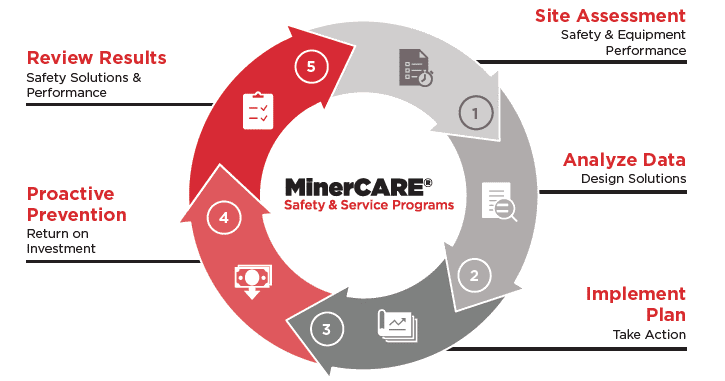
As part of the comprehensive MinerCARE® suite of services, SafeACT Proactive Maintenance Plans include inspections that cover visual checks, cleaning, lubrication to prevent corrosion, and adjustments to keep doors within a safe operating range. In addition, all work comes with a one-year warranty on parts and labor. Therefore, facilities get both protection and predictability in a single program.
If your facility is experiencing high door cycle counts, aging equipment, or recurring repairs, MINER can help identify risks before they become costly disruptions. Contact our team to discuss a proactive service strategy tailored to your operation.